We know.
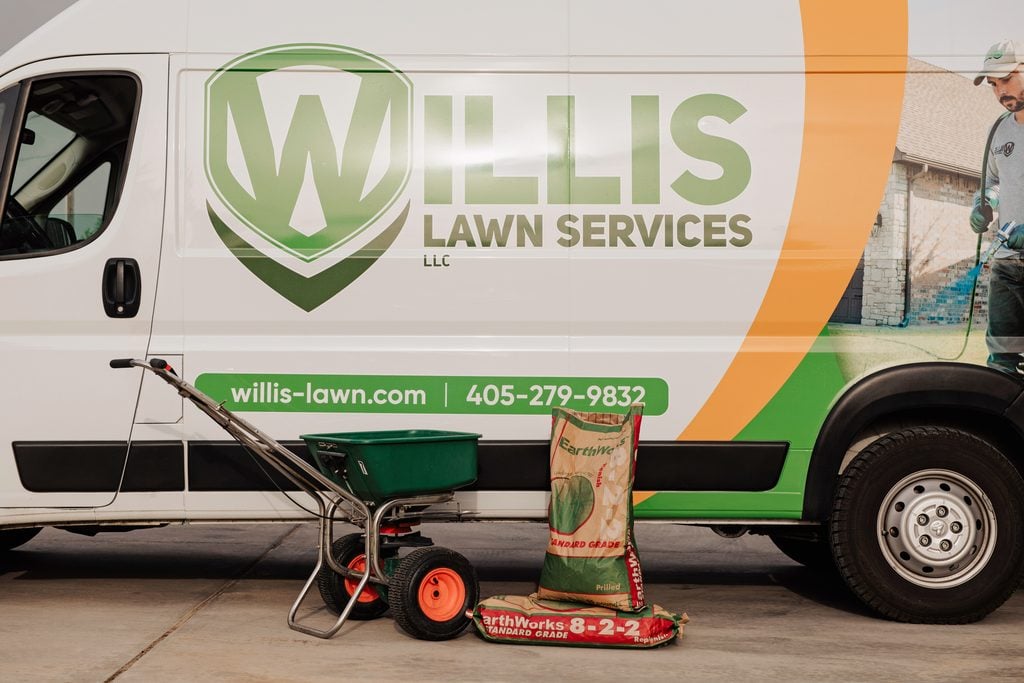
We talk about our soil conditioner a lot.
Maybe too much.
But we keep talking about it because we really do think it’s that beneficial—especially coming out of a summer where Oklahoma lawns spent months battling extreme heat and limited rainfall.
If you haven’t added our Replenish 8-2-2 soil-conditioning application to your lawn program yet, here are three of the biggest reasons we think it’s worth considering.
1. Summer Takes More Out of Your Lawn Than You Might Realize
Your lawn didn’t exactly spend the summer relaxing by the pool.
During Oklahoma’s hottest months, turf can spend a huge amount of its resources simply trying to survive. Extreme heat, dry conditions and irrigation stress can reduce growth, weaken root systems, thin turf and generally put the entire lawn under a tremendous amount of pressure.
And it’s not just the grass that’s affected.
The soil environment itself can become stressed as hot, dry conditions slow biological activity and reduce the movement and cycling of nutrients through the soil.
Once temperatures begin to moderate, we have an opportunity to start rebuilding.
And this is where we really like Replenish 8-2-2.
It combines two different approaches.
The ammonium sulfate provides readily available nitrogen that can support turf growth when the grass is actively using it, while the composted poultry manure supplies organic material and carbon that supports biological activity in the soil.
So we’re not simply trying to make a tired lawn dark green before Thanksgiving.
We’re trying to help the lawn and the soil recover from a long Oklahoma summer and create better conditions going into the next growing season.
For cool-season turf like fescue, fall also happens to be one of the most important growth and recovery periods of the year.
But the bigger idea applies across the property:
summer takes a lot out of the entire lawn system, and fall gives us an opportunity to start putting something back into it.
2. We’re Feeding More Than Just the Grass
This is probably the biggest reason we call this a soil conditioner rather than simply another fertilizer application.
Part of what we’re feeding isn’t the grass at all.
It’s the soil.
Healthy soil isn’t just dirt. It’s a living environment containing bacteria, fungi and countless other organisms involved in breaking down organic material and cycling nutrients.
Replenish contains a substantial amount of composted poultry manure and organic matter. That organic material provides carbon—a food source for soil microorganisms.
That’s important because we’re trying to create a healthier environment in the root zone, not simply dump nutrients onto the lawn and hope the grass turns green.
Different grasses still require different fertilizer timing.
Fescue remains actively growing through the fall and can use nutrition during that period.
Bermuda is different. As our warm-season lawns begin shutting down for winter, we don’t simply keep pouring nitrogen onto them.
That’s why soil health and fertilizer timing aren’t one-size-fits-all.
We’re trying to improve the environment underneath the lawn while still giving each type of turf what it needs when it can actually use it.
3. What Do We Mean When We Say It Helps “Warm Up” the Soil?
This may be our favorite part of the conversation—and it also needs a little explaining.
No, we’re not spreading tiny space heaters across your lawn.
When EarthWorks talks about Replenish helping a cold soil “warm up,” they’re talking about biological activity.
The compost provides carbon that microorganisms can use as a food source. When conditions allow those organisms to become active and begin processing organic material, biological processes increase.
Think about a compost pile.
Even when the weather outside is cold, active decomposition inside a compost pile can generate heat because millions of microorganisms are busy breaking material down.
We’re working with the same basic biological principle in soil—although obviously on a much smaller scale.
So we’re not saying we’re going to turn a 40-degree lawn into a 60-degree lawn overnight.
What we’re trying to do is encourage biological activity in soil during cooler portions of the year instead of treating the soil like an inert pile of dirt.
And that’s what we find so interesting about the product.
It’s Really About the Bigger Picture
Yes, Replenish 8-2-2 contains nitrogen, phosphorus, potassium and sulfur.
And yes, the nitrogen can improve turf color and support growth when the grass is actively growing.
But that’s not really why we can’t stop talking about it.
We’re applying carbon-rich organic material to the soil while also providing plant nutrition.
Our goal isn’t simply:
“How green can we make this lawn next week?”
We’re much more interested in:
“How can we build healthier soil so this lawn performs better next year—and the year after that?”
That’s the bigger idea behind our soil-conditioning program.
And it’s why you’re probably going to hear us talk about it again.
Turn It Down—Don’t Turn It Off
We finally appear to be leaving the 100-degree days behind us, and your irrigation controller needs to know about it.
During the hottest part of an Oklahoma summer, our lawns can use an incredible amount of water. But as temperatures fall, days get shorter and rain chances increase, the lawn simply isn’t losing water at the same rate.
That doesn’t mean it’s time to shut the sprinklers off. It means it’s time to stop watering like it’s August.
Our favorite rule for fall irrigation is simple:
Let rainfall replace irrigation—not supplement it.
If we receive a good soaking rain, skip the next scheduled watering. As the weather continues to cool, begin reducing the number of days you’re irrigating rather than simply giving the lawn tiny amounts of water every day.
We would much rather see an established lawn receive a good, deep watering when it actually needs it than frequent little “sips.” Deep watering encourages roots to explore farther into the soil, while constantly keeping the surface wet can encourage shallow rooting, weeds and disease.
How Do I Know When My Lawn Needs Water?
Your grass will actually tell you.
Watch for:
- A slight blue-gray color
- Grass blades beginning to fold or roll
- Footprints that remain visible after you walk across the lawn instead of quickly springing back
Those are early signs that it’s time to water.
And don’t forget the easiest moisture meter you own: your finger. Check the soil. If it’s still moist several inches down, your lawn probably doesn’t care that the irrigation controller says today is a watering day.
One Important Exception: New Fescue
If you’ve recently seeded or overseeded fescue, don’t follow the same watering strategy as an established lawn. Newly germinating seed needs the surface kept consistently moist until establishment, which normally requires lighter, more frequent watering.
Once that new grass becomes established, we can gradually transition it toward deeper, less frequent irrigation.
The Goal
We’re entering one of the nicest growing periods of the year. We want enough moisture to keep roots active and help the lawn recover from summer—but we don’t want saturated soil simply because nobody changed the irrigation controller after August.
So don’t turn the water off. Just start letting Mother Nature pick up more of the bill.