You went to bed with a beautiful green lawn and woke up to what looks like a construction site.
Small holes. Torn-up turf. Dirt flung everywhere. General chaos.
If you’ve had this experience, there’s a good chance your lawn has become a nice little armadillo restaurant.
Around Oklahoma, the culprit is usually the nine-banded armadillo. They’ve become really common in central Oklahoma, and while they may look a little goofy, they can absolutely wreck the appearance of a lawn overnight.
The important thing to understand is this:
They are usually not attacking your lawn because they hate you. Your lawn is just collateral damage.
What Are They Actually Looking For?
Armadillos are not eating your grass.
They’re using their excellent sense of smell and strong claws to hunt for food in the soil. According to wildlife sources, the vast majority of their diet is animal matter—especially things like beetles and beetle larvae. They also feed on earthworms and other invertebrates.
So when an armadillo starts digging in your yard, it’s not because your Bermuda suddenly became delicious.
It’s because your lawn is offering up a buffet of things under the lawn.
So Why My Lawn?
This is usually the next question.
“Why do they have to feast in my nice lawn?”
There are a couple likely reasons.
1. Your lawn may have a good food supply
Yes, grub prevention can help reduce one food source and may make your lawn less attractive to armadillos.
But grubs are not the only thing they eat.
You may actually have very few grubs and still have armadillos showing up because your lawn has a healthy soil environment full of earthworms and other invertebrates. Ironically, some of the things that are great for soil health can also make your lawn more interesting to an armadillo.
In other words, a healthy lawn can still attract unhealthy levels of armadillo attention.
2. Your lawn is easier to dig
By late summer, a well-watered lawn is often much softer and easier to dig than the dry, rock-hard soil around it.
So if you’re an armadillo out looking for dinner, which would you choose?
The moist, irrigated lawn full of biological activity?
Or the baked, concrete-like Oklahoma clay next door?
Exactly.
Why Do They Keep Coming Back?
Because apparently one traumatic experience wasn’t enough.
Once an armadillo identifies a lawn as a productive feeding area, it will often return repeatedly. That can be one of the most frustrating parts. You clean up the damage, think maybe they’ve moved on, and then the next morning it looks like they invited friends.
A Few Weirdly Impressive Armadillo Facts
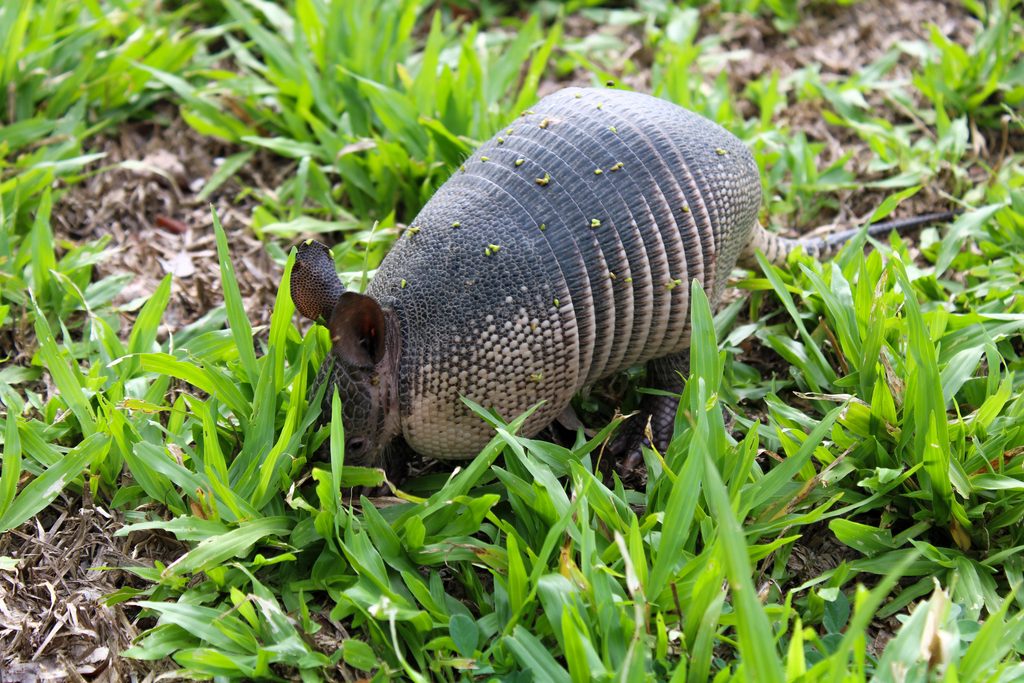
Since we’re already here, a few fun facts:
- They have terrible eyesight
- They have a great sense of smell
- In warmer weather, they tend to be more active at night
- As temperatures cool, they may become more active during the warmer parts of the day
- They can swim
- They can jump several feet vertically when startled, which feels unnecessary and rude
Also, unlike some animals, they do not truly hibernate, and they don’t handle extreme cold particularly well.
Will Lawn Treatments Get Rid of Them?
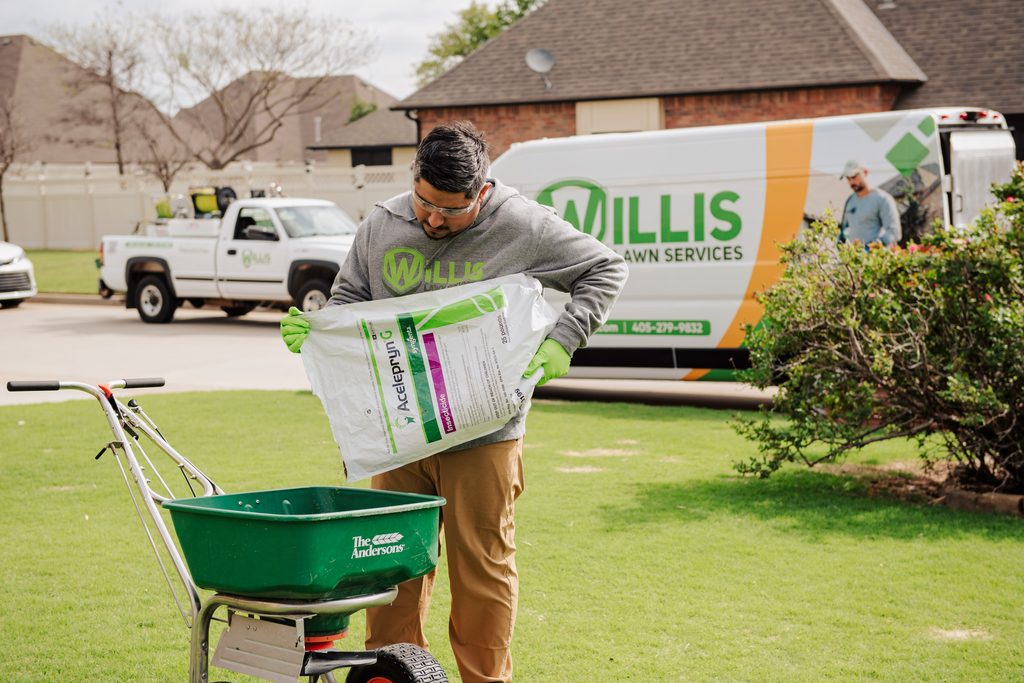
Unfortunately, there’s not a perfect lawn-treatment solution.
If your grub prevention program is reducing the number of grubs in the soil, that can certainly help reduce one reason they may be visiting. But because armadillos eat a range of soil-dwelling creatures, grub control alone is not a guaranteed fix.
Repellents may work for a little while.
Scare devices may work for a little while.
Then many armadillos seem to decide they are no longer impressed.
So What Actually Works?
Unfortunately, there isn’t a magic answer.
The most reliable solution is usually trapping and removal.
That’s not as fun as us saying, “Just put this product out and they’ll leave forever,” but it’s the truth.
If armadillos are damaging your lawn, the issue is usually less about the turf itself and more about the animal deciding your yard is a good feeding ground.
The Bottom Line
If your yard suddenly looks like it was attacked by a tiny bulldozer, you probably didn’t create an armadillo problem on purpose.
You likely created conditions for a healthy lawn—good moisture, active soil life, and soft diggable ground.
Unfortunately, that can also look a lot like an all-you-can-eat buffet to an armadillo.
So no, they’re probably not after your grass.
But they may absolutely destroy it while looking for dinner.